Beekeeper Studio is modern and approachable, with support for many databases. The question is whether you need cross-platform breadth or a native Mac Postgres client.
Beekeeper Studio supports MySQL, PostgreSQL, SQLite, SQL Server, and more. That is great for mixed stacks, but broader than a dedicated Postgres app.[1]
Beekeeper Studio has a free Community Edition and paid Indie, Professional, and Business plans. Teams should check the current pricing before standardizing.[2]
Cross-platform consistency is useful, but it usually means fewer platform-specific macOS details than a native Swift app can provide.
When PostgreSQL is your only database, multi-engine navigation and messaging can feel less direct than a tool designed around Postgres workflows.
PostgresGUI keeps the scope tight: connect to Postgres, browse tables, run queries, edit rows, view JSON, and export data in a native Mac app.
PostgresGUI is built specifically for Mac, so it can lean into platform conventions rather than matching every operating system.
No engine switcher, no multi-database positioning, no broad SQL client baggage when your work is Postgres.
The signed Mac App Store version is a one-time purchase, and the source can be built directly from GitHub.
PostgresGUI is transparent and contributor-friendly, with public source and issue tracking.
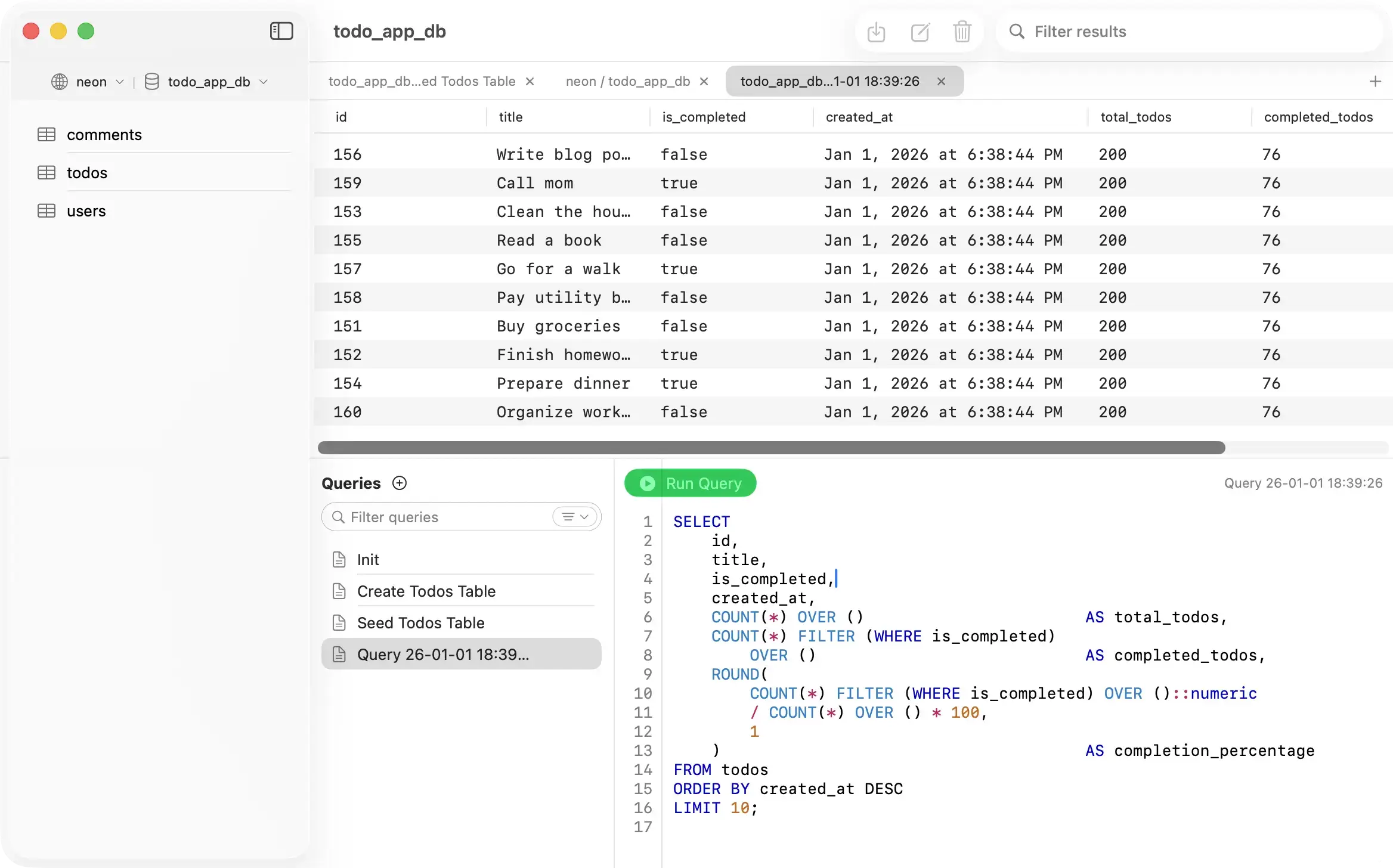
Both are approachable database clients. The important difference is cross-platform breadth versus native Mac Postgres focus.
| Feature | PostgresGUI | Beekeeper Studio |
|---|---|---|
| Primary focus | PostgreSQL on Mac | SQL client for many engines |
| Platforms | macOS | Mac, Windows, Linux |
| Open source | ||
| Pricing model | $12.99one-time App Store | Free + paid tiers |
| Best for | Native Mac Postgres work | Mixed-database workflows |
| App Store install |
Beekeeper Studio is a strong choice for mixed stacks. PostgresGUI is a better fit when your database work is Postgres on Mac.